

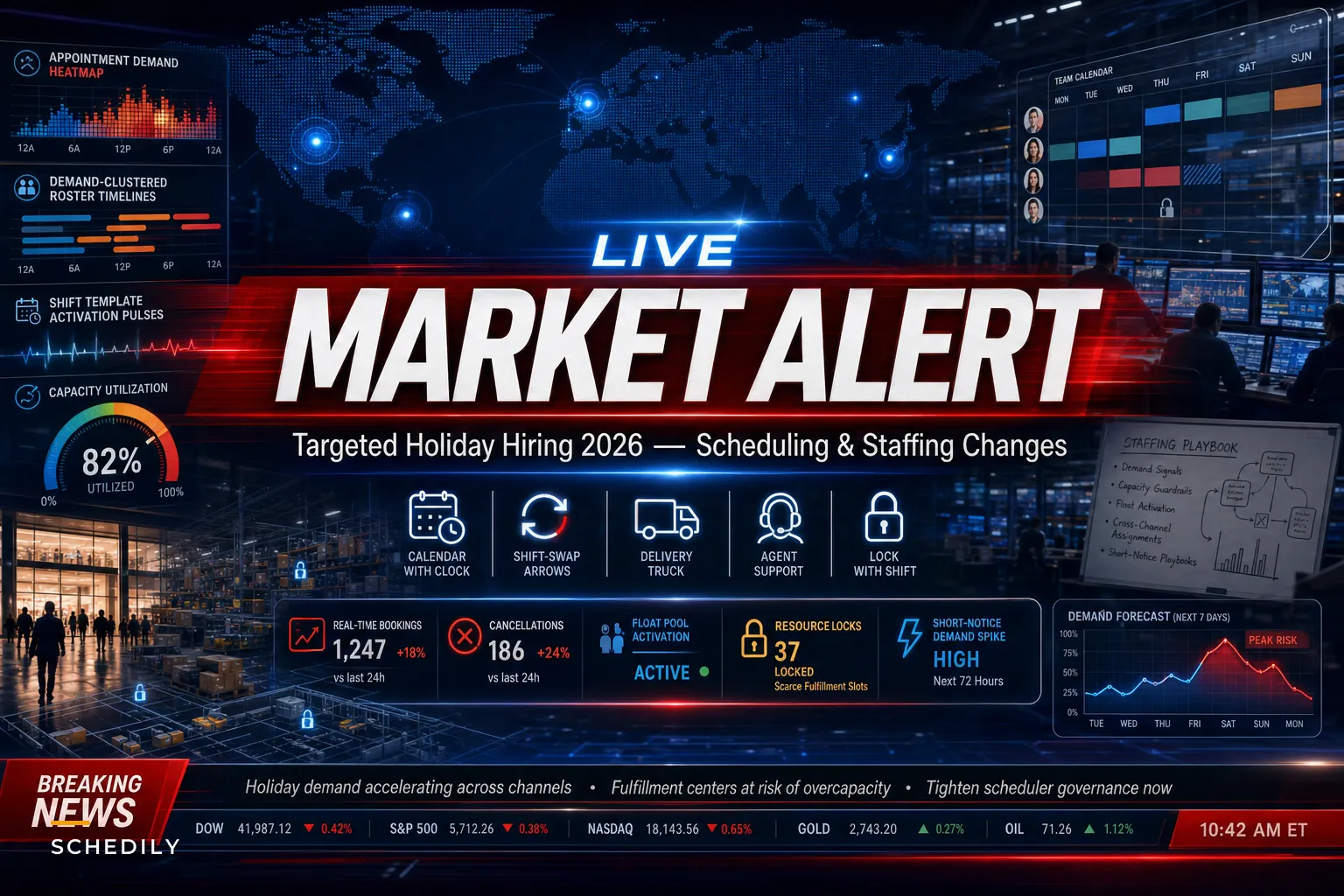

The 2026 seasonal hiring picture is sending, as one CNBC piece put it, "mixed signals." Amazon is bringing on roughly 300,000 workers, UPS around 100,000, but a lot of retailers are doing something different this year — hiring selectively by channel, and quietly converting some seasonal roles into permanent part-time positions instead of mass-adding temporary headcount. Modern Retail described it as retailers taking a more targeted approach heading into what's expected to be a strong sales year.
For the big logistics and retail players, that's a labor strategy story. For everyone running appointment-driven or multi-location operations — clinics, med spas, home-service dispatch teams, repair shops, salons, inspection services — it's actually a warning about capacity. When the broader labor market tightens around a few giant hiring events, the float-pool workers and part-timers you rely on in December get harder to find, more expensive, and less reliable. The "convert seasonal to permanent part-time" trend means the casual, grab-them-for-six-weeks labor you used to lean on is getting locked up earlier by bigger employers.
So the real question isn't whether to hire for the holidays. It's: given that good short-window labor is scarcer and getting pulled in more directions, how do we schedule the people we actually have so throughput doesn't collapse during the three or four weeks that matter most? That's a scheduling problem far more than a recruiting problem.
Why Targeted Hiring Hurts Small Operations More Than Big Ones
Big retailers can absorb a selective hiring strategy because they have volume and flexibility — thousands of interchangeable roles, multiple fulfillment nodes, the ability to shift work between stores and warehouses. A three-location dermatology group or a regional HVAC dispatcher doesn't have that luxury. When you lose even two reliable part-timers in your December float pool, you're not losing 1% of capacity. You might be losing 15–20% of your surge coverage.
The pattern worth noticing: the businesses that struggle most in December aren't the ones that under-hired. They're the ones who hired bodies but didn't redesign their scheduling rules to use those bodies well.
A typical example looks like this. A multi-location clinic brings on four seasonal front-desk and medical-assistant hires in mid-November. By the second week of December, three of them are still shadowing because nobody built a ramp plan, the booking system still routes complex appointments only to senior staff, and the new hires sit at 40% utilization while the veterans are drowning. The labor exists. It's just not reachable inside the schedule.
That gap — between headcount on payroll and capacity actually available to the booking system — is where holiday operations quietly bleed money.
The Deeper Problem: Your Schedule Assumes a Workforce You No Longer Have
Most appointment businesses build their holiday schedule as a slightly inflated version of their normal schedule. More shifts, same rules. That worked when seasonal labor was cheap and plentiful. In a market where surge labor is being absorbed by targeted corporate hiring, the old approach breaks in three specific ways:
Eliminate scheduling conflicts and missed meetings.
Schedily helps you organize and manage all appointments and team availability effortlessly.
- Unified appointment and resource management
- Automated notifications & reminders
- Team calendar synchronization
No credit card required
-
Your assignment rules are too rigid. If only certain staff can take certain appointment types, a thinner roster means more blocked slots, not more capacity.
-
Your float pool is thinner and slower to activate. Short-notice coverage depends on having people who can be called in and dropped into the right slots immediately.
-
Your demand is spikier than your roster is flexible. Holiday demand doesn't arrive evenly. It clusters around specific days, and a static weekly roster can't flex into those clusters.
The fix isn't "hire more." It's making every person on the roster usable across more of the schedule — through cross-training, smarter assignment rules, and demand-matched rosters built from your own booking history rather than a gut-feel bump on last year's template.
If you haven't already built forecasts from your actual booking data, now is the time. We walked through the full method in our guide on turning appointment history into seasonal headcount plans, and it's the foundation everything below depends on. You can't schedule a surgical workforce without knowing where your real demand spikes actually land.
Five Scheduling Changes to Make Before Peak
These aren't theoretical. They're the levers that actually move throughput when labor is tight.
1. Rebuild Your Rosters Around Demand Clusters, Not Weeks
Stop thinking in "shifts per week." Pull the last two or three Decembers and look at demand by day and hour. Most appointment businesses find their holiday load concentrates into surprisingly few windows — often six to nine peak blocks across the whole season that drive the majority of overflow risk.
2. Expand Who Can Take What
Every appointment type locked to a single staff tier is a constraint on your capacity. Before December, identify the two or three appointment types that cause the most routing bottlenecks and cross-train at least one additional person on each. You don't need everyone to do everything — you need enough overlap that no single absence freezes a slot type.
Focus cross-training on the two or three appointment types that cause the biggest routing backups.
3. Build a Real Short-Notice Activation Ladder
A float pool only helps if it activates fast and drops people into the right slots. Define, in writing, the order you call people, how fast they're expected to confirm, and which appointment types each float member can cover. Vague "we'll call someone" plans fall apart on the exact days you need them most.
4. Tighten Deposit and Cancellation Rules Where Staffing Risk Is Highest
When coverage is thin, a no-show on a high-value slot costs more than usual — you can't easily backfill it. For your most capacity-sensitive appointment types, raise deposits or shorten free-cancellation windows during peak weeks only. This isn't about squeezing customers; it's about protecting slots you can't afford to lose when the roster is already stretched.
5. Reconcile Bookings Against Real Available Capacity Daily
The quiet killer during peak is drift between what the booking system thinks you can handle and what the roster actually supports after call-outs and ramp delays. A daily reconciliation — even a 15-minute check — catches overcommitment before it turns into a double-booked, understaffed morning.
A Quick Comparison: Old vs. Targeted-Era Holiday Staffing
The table below lays out where the old assumptions break down and what a tighter labor market actually demands from your scheduling approach.
| Dimension | Old approach | What tight-labor 2026 demands |
|---|---|---|
| Roster design | Last year + 10% across the board | Demand-cluster staffing by day/hour |
| Seasonal labor | Grab plentiful temps late | Fewer hires, higher utilization, early cross-training |
| Assignment rules | Rigid, tier-locked | Expanded overlap on bottleneck appointment types |
| Float pool | Informal call list | Written activation ladder with slot-type mapping |
| No-show risk | Flat policy year-round | Elevated deposits on peak, capacity-sensitive slots |
| Capacity tracking | Set-and-forget schedule | Daily booking-vs-roster reconciliation |
The differences aren't subtle. Every row on the right side requires deliberate action before peak hits — none of it happens automatically when you're already in the middle of a busy December.
A Realistic Scenario
A two-location mobile repair business — roughly 310–340 jobs booked in a normal December across both sites — usually hired three seasonal techs to cover the surge. In 2026, they could only land one reliable hire; the rest of their usual seasonal pool had taken part-time roles with larger employers earlier in the fall.
Instead of accepting a capacity cut, they changed the schedule mechanics. They mapped their last two Decembers and found about 70% of overflow jobs landed in roughly seven peak windows. They cross-trained their two newest full-timers on diagnostic jobs that had previously only gone to the lead tech, which unblocked a routing bottleneck that used to push those jobs into a two-day backlog. They also raised deposits on same-week premium slots during the three busiest weeks.
The outcome wasn't dramatic — it was just stable. They handled their normal December volume with one seasonal hire instead of three, backlog days dropped noticeably, and the deposit change cut peak-week no-shows enough to recover slots they'd otherwise have lost. Same demand, thinner roster, no collapse — because the schedule did the heavy lifting the extra bodies used to do.
When This Makes Sense — and When It Doesn't
This approach makes sense when: your December demand concentrates into identifiable peaks, you have staff who could be cross-trained but currently aren't, and your booking rules are more rigid than your actual capability requires.
This is a bad idea when: your appointment types genuinely require specialized credentials or licensing that can't be cross-trained quickly. Forcing overlap where it's unsafe or non-compliant isn't optimization — it's a liability. In those cases, lean harder on demand-cluster rostering and deposit protection instead.
Who should probably skip the aggressive version: very small single-location shops with one or two staff. The gains from cross-training and float ladders are smaller when there's barely a roster to flex. Focus those teams on no-show protection and realistic demand forecasting instead.
Where Software Quietly Earns Its Keep
None of this requires a big platform to think through, but it's genuinely hard to execute by hand once you're juggling multiple locations, a float ladder, cross-trained assignment rules, and daily reconciliation. The manual version lives in a spreadsheet nobody updates by December 15th.
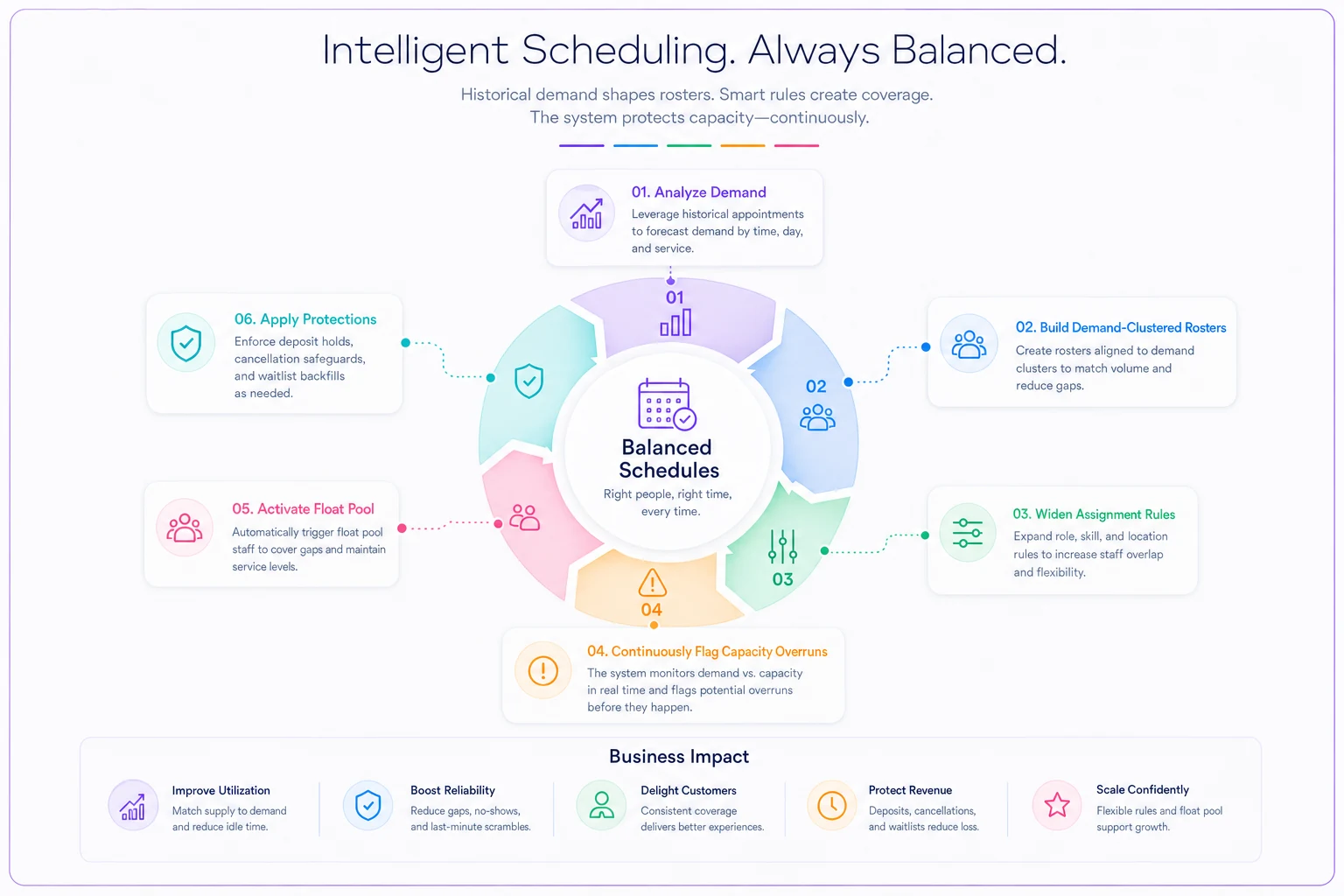
An AI-assisted scheduling platform helps here — not as a gimmick, but by handling the tedious coordination: matching rosters to historical demand shape, flagging when bookings are outrunning available capacity, routing appointments to the widened pool of qualified staff automatically, and triggering float activation when call-outs hit. The goal is making sure the labor you do have is always reachable inside the schedule, without someone babysitting it hour by hour.
A simple workflow showing how software coordinates demand, rosters, and float activation:
The tools matter less than the discipline, though. A business that redesigns its rules around a tighter labor market will outperform one that just throws more December shifts at an old template — software or not.
The Takeaway for Operations Teams
The 2026 hiring signals aren't really about Amazon's 300,000 or UPS's 100,000. They're a signal that the easy, plentiful seasonal labor you used to backfill with is getting locked up earlier and spread thinner. For appointment-driven and multi-location businesses, the winning move isn't out-hiring the giants — you can't. It's making your existing roster usable across more of the schedule, matching shifts to where demand actually clusters, and protecting the slots you can't afford to lose.
Build the forecast, widen your assignment rules, write down your float ladder, and reconcile daily. Do that now — not in the second week of December, when the only thing you can adjust is your apology to customers.
Build the forecast, widen your assignment rules, write down your float ladder, and reconcile daily. Do that now — not in the second week of December, when the only thing you can adjust is your apology to customers.
Ready to optimize your scheduling and operations?
Join thousands of businesses using Schedily to save time, improve coordination, and enhance operational efficiency.